Close

Blogs

Safety Footwear Standards & Compliance Requirements for Automotive Manufacturing Plants
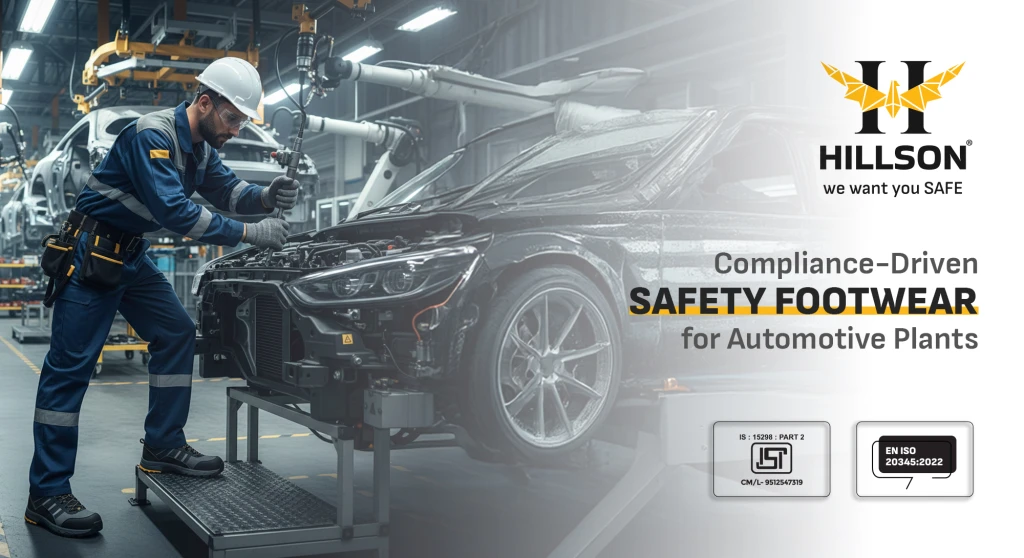
blog

by Hillson Jan Wed 2026

Safety Footwear Standards & Compliance Requirements for Automotive Manufacturing Plants

Automotive manufacturing facilities operate with a unique combination of heavy mechanical processes, precision assembly, welding, paint technology, and logistics movement. In such environments, ensuring compliance with certified safety footwear is no longer optional—it is an operational requirement tied directly to safety audits, productivity metrics, and regulatory standards.

Why Footwear Compliance Matters

Across assembly lines, welding bays, paint shops, and warehouses, workers are routinely exposed to hazards such as:

  • Impact from falling tools or metal components
  • Slips due to oil, grease, coolants, and hydraulic fluids
  • Heat exposure from welding and cutting operations
  • Sharp objects capable of puncturing soles
  • Static discharge in paint and electronic zones

When footwear is not aligned with recognized standards, the probability of recordable incidents and non-compliance findings increases significantly. Automotive OEMs globally have tightened PPE requirements, and footwear compliance is consistently reviewed during supplier audits.

Applicable Standards in Automotive Ecosystems

Automotive manufacturers typically reference international or national standards that define performance, testing, and certification criteria for safety footwear:

EN ISO 20345

Widely adopted across global automotive networks. Specifies:

  • 200J toe impact protection
  • Slip resistance ratings (SRA/SRB/SRC)
  • Puncture resistance (S1P/S3)
  • Anti-static/ESD protection
  • Heat resistance (HRO)

IS 15298

Indian standard aligned with EN ISO 20345 and commonly mandated by OEMs and Tier-1 suppliers operating in India.

Our Automotive-Grade Footwear Solutions

Hillson has engineered safety footwear specifically for automotive manufacturing conditions, considering both compliance demands and shop-floor practicality. Our range includes:

Composite & Steel Toe footwear tested to 200J
S1P / S3 Rated models with puncture-resistant midsoles
ESD & Anti-Static footwear suitable for paint and electronics areas
HRO Outsoles for welding and heat-intensive processes
SRC Slip Resistant designs for oily and wet floors

Application Matrix for Automotive Plants


This structured footwear allocation reduces safety observations during audits and ensures alignment with EHS protocols.

Conclusion

Experienced EHS leaders in the automotive sector understand that compliant footwear directly influences workplace safety KPIs, audit performance, and operational uptime. Investing in certified safety footwear—suited to specific hazard zones—is both a risk mitigation strategy and a productivity enabler.

With the right combination of standard-driven protection and shop-floor practicality, automotive plants can maintain compliance, minimize incidents, and uphold global manufacturing excellence.

Recent blogs
