By: Abhinav Mishal | Head Safety (EHS) | Ambuja Cement Ltd, Roorkee (UK) Cement Business | Adani Group
Every Near Miss, Every Safety Improvement
Deserves to Be Shared
Shaping Safer Workplaces Through Insight, Action, and Care
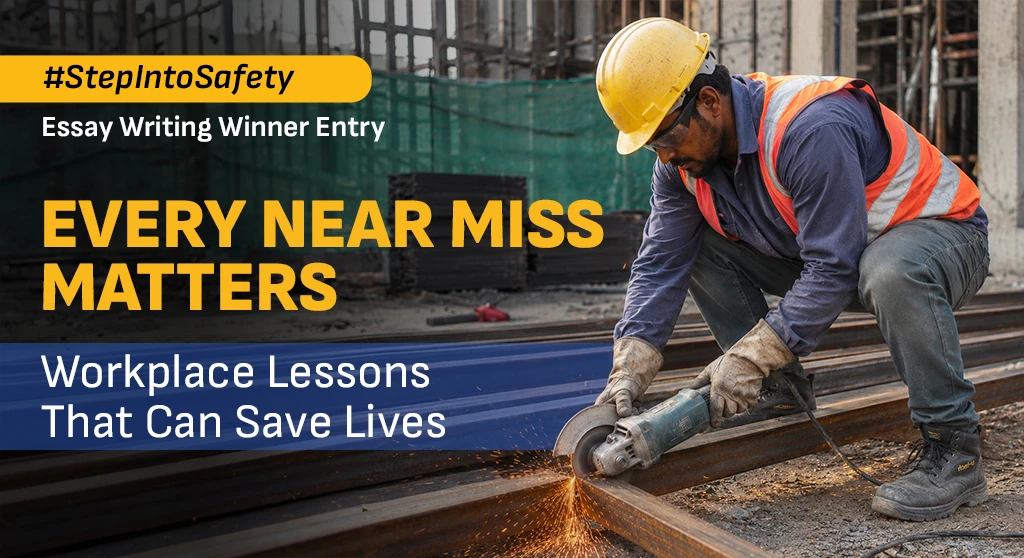
Safety is often spoken about in metrics, procedures, and compliance systems. Yet, the true strength of workplace safety lies in the moments that almost went wrong-but did not. Near misses, small interventions, and everyday safety decisions quietly save lives. These moments rarely make headlines, but each one carries a lesson powerful enough to prevent a serious injury or even a fatality.
At an industrial manufacturing site operating in a high-risk environment, safety is not an abstract concept-it is lived daily. Through proactive hazard identification, disciplined PPE usage, continuous learning from near misses, and people-driven safety leadership, workplaces can be transformed into spaces where every individual return home safely. This essay shares real insights drawn from workplace experiences that demonstrate why every near miss and every safety improvement truly deserves to be shared.
Understanding the Reality of Workplace Hazards
Industrial workplaces involve heavy machinery, working at height, electrical systems, vehicular movement, and material handling. Each activity carries inherent risk. While engineering controls and procedures are essential, many hazards arise from routine conditions - material spillage, poor housekeeping, unsafe access, or momentary lapses in attention.
One of the most common hazards observed across workplaces is slip, trip, and fall risk. Dust accumulation on staircases, spilled clinker near conveyors, uneven walkways, or waterlogging after cleaning operations can appear harmless at first glance. Yet, these seemingly minor conditions repeatedly surface in near-miss reports, highlighting how everyday hazards can escalate rapidly.
Other frequent workplace hazards include unsecured tools during work at height, damaged electrical cables, improper vehicle parking, and inconsistent PPE usage. These risks underline an important truth: hazards are not rare events-they exist in normal, routine work if not actively managed.
Near Miss Incidents: The Quiet Warnings That Protect Lives
A near miss is a gift of insight-an incident that could have resulted in harm but did not. In many cases, near misses occur without injury simply because someone noticed something early or reacted in time.
One such incident involved a worker climbing a staircase coated with fine dust. The foot slipped unexpectedly, and for a fraction of a second, the person lost balance. By instinctively holding the handrail, the fall was avoided. No injury occurred, but the realization was immediate: the staircase condition had the potential to cause serious harm. The reported near miss led to immediate housekeeping improvement and long-term attention to dust control in access areas.
In another case, maintenance work was underway at height on a mesh platform. Small tools and bolts had been placed on the open mesh surface. During activity, some parts fell through the gaps. Thankfully, no one was standing below. The near miss exposed a serious falling-object hazard. As a result, tool trays, controlled storage, barricading, and supervision became mandatory during such tasks.
These incidents highlight a critical lesson: near misses are not failures-they are opportunities to fix systems before people get hurt.
Safety Improvements: Turning Observation into Action
One of the defining features of a safer workplace is how quickly and effectively it responds to hazards once identified. In high-performing organizations, safety improvements are not delayed, debated, or ignored-they are acted upon.
Repeated observations of material spillage near clinker, fly ash, and gypsum handling points led to stronger housekeeping standards, faster cleanup response, and clearer accountability across shifts. Walkways and staircases became visibly safer as a result.
Electrical safety also improved through early reporting. Hanging boards, damaged cable insulation, loose sockets, and inadequate lighting were identified and corrected before any electrical incident occurred. Improved illumination not only reduced electrical risks but also lowered slip and trip hazards by improving visibility.
Vehicle-related hazards such as missing wheel chocks, unauthorized parking, or improper positioning were corrected through immediate intervention and driver counselling. These interventions prevented potential run-away vehicle incidents-some of the most severe hazards in industrial environments.
Each safety improvement was small in isolation but powerful in impact. Collectively, they formed a protective safety net across the workplace.
Lessons Learned from Workplace Hazards
The experiences drawn from hazard reporting and near-miss analysis reveal valuable lessons:
First, housekeeping is not cosmetic-it is safety-critical. A clean workplace directly prevents slips, trips, and secondary injuries. Most near misses begin on the floor, not in complex systems.
Second, near misses predict accidents. Every serious injury investigation often traces its root cause to a previously ignored near miss. Acting early prevents escalation.
Third, unsafe behaviour must be corrected immediately but respectfully. PPE non-compliance or unsafe shortcuts occur when habits replace awareness. Counselling and engagement are more effective than punishment.
Fourth, systems improve when people speak up. A culture where employees feel comfortable reporting hazards-without fear-creates continuous risk reduction.
Finally, safety learning is collective. When one person reports a near miss, the entire organization benefits from the lesson.
PPE Impact Stories: The Last Line of Defence That Worked
Personal Protective Equipment is often described as the last line of defence-but when that line holds, it saves livelihoods and lives.
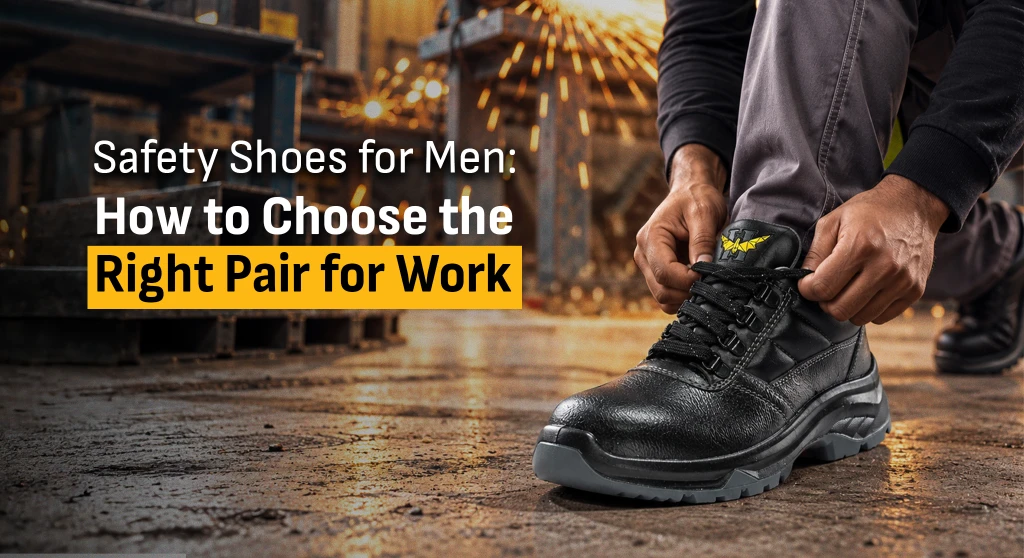
In one incident, while retrieving a file from a cabinet, a drawer suddenly detached and fell directly onto a worker's foot. The impact was sudden and unavoidable. However, because the individual was wearing mandatory safety shoes, there was no injury. Without PPE, the outcome could have been a fracture and lost-time injury. That single pair of safety shoes silently did its job.
In other situations, helmets prevented head injuries during low-clearance lifting work, safety shoes provided grip on slippery stairs, and nose masks reduced inhalation exposure in dusty areas. These are not theoretical benefits-these are real interventions where PPE turned danger into a safe escape.
Equally important is how PPE compliance is achieved. Immediate correction, respectful conversation, and leadership example ensure PPE is worn not because it is mandated, but because it is understood to protect.
People at the Centre of Safety
The strongest thread running through all safety improvements is people ownership. Safety officers, supervisors, engineers, contractors, and workers alike actively participate in making workplaces safer. Individuals stop unsafe work, counsel peers, report repeated hazards, and ensure corrective actions are closed.
Toolbox talks, safety inductions, audits, and emergency drills reinforce knowledge, but it is daily behaviour that sustains safety. When leadership demonstrates visible commitment and employees feel empowered to act, safety becomes a shared value rather than a written rule.
Why Safety Insights Must Be Shared
Safety does not begin with rules, nor does it end with PPE. It begins with awareness, grows through action, and is sustained by care. Every near miss tells a story. Every safety improvement reflects a choice. And every shared lesson has the power to protect someone, somewhere, someday.
By sharing our safety insights, we honour not only procedures but people-those who work with risk and responsibility every day. Platforms like Hillson's "STEP INTO SAFETY" remind us that safety leadership is not limited to titles or roles; it belongs to anyone willing to observe, intervene, and speak up.
If even one shared experience prevents one injury, then the effort is worth it- because nothing we do is worth getting hurt for.
Conclusion
Safer workplaces are not built only through policies or PPE, but through insight, action, and care. Near misses teach us where systems fail quietly. Safety improvements show what success looks like in practice. PPE proves its value in moments where nothing else can intervene. And people-alert, empowered, and committed-make safety real.
Every near miss prevented an injury. Every safety improvement
protected a life. Every lesson learned deserves to be shared.
That is how we truly step into safety.