Choosing the right safety shoes is an important decision for anyone working in construction, manufacturing, engineering, warehousing or other industrial environments. One of the most common questions buyers face is whether to choose steel toe or composite toe safety shoes.
Both types are designed to protect the toes against workplace impact and compression hazards. However, they differ in the materials used, overall weight, thermal properties and suitability for certain working conditions.
Understanding these differences can help employees, safety managers and procurement teams select footwear that meets workplace requirements without compromising on essential protection.
In this guide, we compare steel toe and composite toe safety shoes, explain their advantages and limitations, and help you understand which option may be more suitable for your working environment.
What Are Steel Toe Safety Shoes?
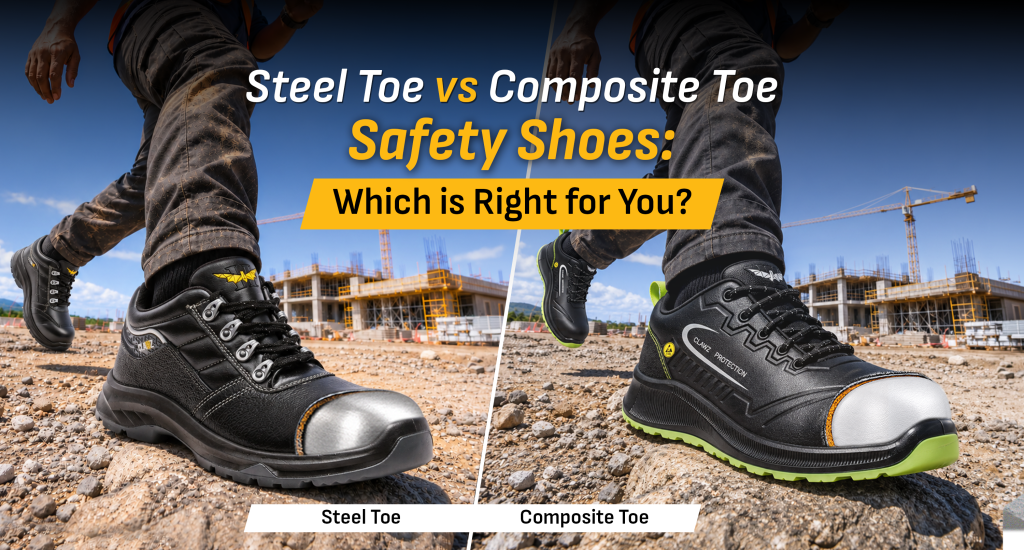
Steel toe safety shoes feature a protective cap made from steel, positioned inside the front section of the footwear. This cap is designed to protect the toes against impact from falling objects and compression caused by heavy objects.
Steel toe footwear is commonly used in industries where employees handle machinery, tools, construction materials and heavy equipment.
Key characteristics of steel toe safety shoes:
Impact and compression protection: A certified steel toe cap is tested to meet the required protection levels under the applicable safety standard.
Compact toe-cap design: Steel generally allows for a relatively thin protective cap, which can provide more internal toe space depending on the footwear design.
Durable construction: Steel toe caps are widely used in demanding industrial applications.
Temperature transfer: Steel conducts heat and cold more readily than non-metallic materials, which can matter in temperature-sensitive environments.
Metal content: Steel toe caps can trigger metal detectors, depending on the sensitivity of the detection system.
For workplaces with significant impact and compression hazards, steel toe safety shoes remain a widely used protective footwear option.
What Are Composite Toe Safety Shoes?
Composite toe safety shoes use non-metallic materials instead of steel to construct the protective toe cap. Depending on the manufacturer, these materials may include fibreglass, carbon fibre, reinforced polymers or other composite materials.
They are designed to provide the required toe protection while offering some advantages associated with non-metallic construction.
Key characteristics of composite toe safety shoes:
Non-metallic construction: The toe cap does not contain steel or other metallic components.
Reduced toe-cap weight: Composite materials are generally lighter than steel, although the weight of the complete shoe depends on its overall construction.
Lower thermal conductivity: Composite materials do not transfer heat and cold in the same way as steel.
Metal detector compatibility: A composite toe cap itself will not trigger a metal detector, although other metallic components in the shoe may still do so.
Potentially bulkier toe profile: Some composite toe caps require more space than steel caps, so internal fit should be checked.
Composite toe footwear can be a practical option for employees who need certified toe protection in environments where non-metallic footwear is preferred.
Steel Toe vs. Composite Toe Safety Shoes: Key Differences
Although both options provide protective toe-cap construction, their material properties create differences that may influence your decision.
Comparison factor | Steel toe | Composite toe |
Material | Steel | Non-metallic materials |
Weight | Generally heavier toe cap | Generally lighter toe cap |
Impact protection | Depends on certification and rating | Can meet the same specified protection requirements |
Temperature transfer | Conducts heat and cold | Lower thermal conductivity |
Metal detectors | May trigger detection | Toe cap itself does not trigger detection |
Toe-cap profile | Generally thinner | Can be bulkier |
Best suited for | Applications requiring certified toe protection where metal is acceptable | Applications preferring non-metallic toe protection |
Important: The material alone does not determine the level of safety. Both steel and composite toe caps can meet the same impact and compression requirements when tested and certified to the relevant standard. Always check the footwear's certification and technical specifications.
Are Composite Toe Safety Shoes as Safe as Steel Toe Shoes?
Yes, composite toe safety shoes can provide the same specified level of impact and compression protection as steel toe safety shoes when both are certified to the same applicable performance requirements.
The difference lies primarily in the material used to achieve that protection, rather than an automatic difference in safety performance.
For example, under EN ISO 20345:2022, safety footwear with a protective toe cap is tested against a specified impact energy of 200 joules. The applicable certification and product markings should be checked to confirm the protection offered by a particular pair.
This is why buyers should not judge safety footwear simply by whether the toe cap is made of steel or composite material. The complete product must meet the requirements relevant to its intended application.
Which Type Is Better for Different Work Environments?
The right choice depends on the conditions in which the safety shoes will be used. Here are some considerations for common industrial environments.
1. Construction and Infrastructure
Construction sites can expose workers to falling materials, heavy equipment, sharp objects and uneven surfaces.
Steel toe safety shoes may be suitable where certified impact and compression protection is required and there is no specific need for non-metallic footwear. However, composite toe options can also be considered if they meet the site's safety requirements.
Other features, such as penetration-resistant midsoles and suitable outsole grip, should also be assessed.
2. Manufacturing and Engineering
Manufacturing facilities often involve machinery, metal components, tools and material handling operations.
Both steel and composite toe safety shoes may be appropriate, depending on the hazards identified in the work area. Procurement teams should consider the required toe protection, outsole properties, resistance requirements and compatibility with workplace procedures.
3. Warehousing and Logistics
Warehouse employees frequently move between storage areas, loading bays and dispatch sections.
Where employees spend long hours walking, the overall weight of the footwear may be an important consideration. Composite toe safety shoes may be worth evaluating, but the weight of the complete shoe, fit and outsole performance should also be considered.
4. Facilities with Metal Detection Systems
Some workplaces require employees to pass through metal detection systems as part of their entry and security procedures.
Composite toe caps can be useful in these environments because they are non-metallic. However, buyers should confirm whether the entire shoe is compatible with the site's metal detection requirements. Eyelets, shanks and other components may still contain metal.
Does a Composite Toe Mean Electrical Protection?
No. This is an important distinction when selecting safety shoes.
A composite toe cap is non-metallic, but that alone does not mean the footwear provides certified electrical hazard protection.
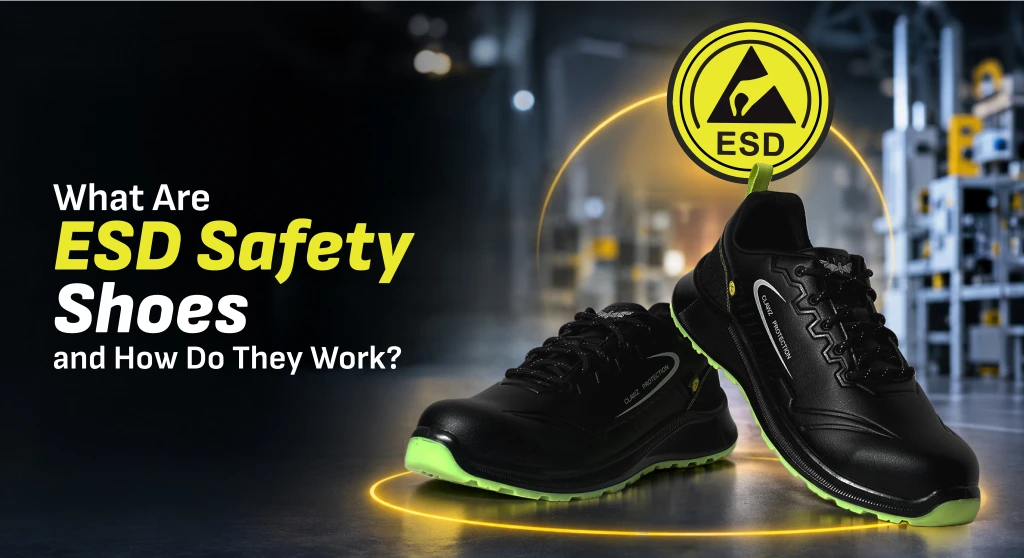
Electrical protection depends on the complete footwear construction and the applicable certification or rating. Similarly, antistatic footwear is designed to manage the accumulation of static electricity and should not be confused with footwear intended to protect against electric shock.
If employees work in environments involving electrical hazards, the required protection must be identified through a workplace risk assessment. Check the relevant product markings and technical documentation before making a selection.
What Should You Check Before Buying Safety Shoes?
Whether you choose steel toe or composite toe safety shoes, the following factors should guide your purchase:
1. Applicable Safety Standard
Check whether the footwear complies with the safety standard required for your workplace. Review the certification, markings and product documentation rather than relying only on product descriptions.
2. Required Toe Protection
Confirm that the toe cap meets the impact and compression requirements associated with the job.
3. Sole and Underfoot Protection
Toe protection does not automatically provide protection against sharp objects underfoot. If the workplace involves nails, metal fragments or other penetration hazards, check whether a suitable penetration-resistant midsole is required.
4. Slip Resistance and Outsole Design
Assess the floor conditions and select footwear with appropriate outsole properties for the working environment.
5. Fit and Overall Weight
The shoe should fit properly without excessive pressure around the toes. Compare the weight of the complete footwear rather than considering only the toe-cap material.
6. Workplace-Specific Requirements
Consider exposure to oils, chemicals, extreme temperatures, electrical hazards and other conditions that may require additional footwear features.
Conclusion: Choose Safety Shoes Based on Your Workplace Needs
The choice between steel toe and composite toe safety shoes should be based on more than material or weight. Both options can provide reliable toe protection when they meet the relevant safety standards, but their different properties make them suitable for different workplace preferences and conditions.
Steel toe footwear may be appropriate where traditional metal toe protection is acceptable, while composite toe footwear can be considered where non-metallic construction, lower toe-cap weight or reduced heat transfer is preferred.
Before making a purchase, assess the workplace hazards, verify the required safety ratings and consider the complete footwear construction.
At Hillson, safety footwear is developed for the requirements of different industrial applications. Explore the range of safety shoes to understand the available options and identify footwear suited to your workplace requirements.
Frequently Asked Questions About Steel Toe and Composite Toe Safety Shoes
1. Which is better: steel toe or composite toe safety shoes?
Neither is universally better. Steel toe shoes are a common choice for industrial applications requiring certified impact and compression protection. Composite toe shoes offer non-metallic construction and generally lower toe-cap weight. The right option depends on workplace hazards, certification requirements and user needs.
2. Are composite toe safety shoes lighter than steel toe shoes?
Generally, yes. Composite toe caps are usually lighter than steel toe caps. However, the weight of the complete safety shoe also depends on the upper material, outsole, midsole and other components.
3. Do steel toe safety shoes trigger metal detectors?
They can, because the toe cap contains metal. The result depends on the metal detector and its sensitivity.
4. Can composite toe safety shoes provide 200-joule protection?
Yes. Composite toe safety shoes can meet the 200-joule impact requirement under EN ISO 20345 when designed, tested and certified accordingly. Always verify the product's certification and markings.
5. Do composite toe safety shoes provide electrical protection?
Not automatically. A non-metallic toe cap does not establish electrical hazard protection. The complete footwear must carry the appropriate rating for the intended electrical application.
6. Do steel toe and composite toe shoes offer the same protection?
They can provide the same specified impact and compression protection when certified to the same applicable standard. Other protective features, such as penetration resistance and slip resistance, must be checked separately.