Rain, mud and wet floors are not just seasonal problems. For many workers, they are part of everyday work. Farmers, construction workers, factory teams, sanitation workers, warehouse staff and outdoor maintenance teams often work in areas where normal shoes and regular clothing are not enough.
This is where gumboots and rainwear become important. They do more than keep workers dry. They help protect the feet and body, improve grip, support hygiene and reduce discomfort during wet working conditions.
Wet and slippery surfaces are a common workplace risk. OSHA safety material mentions wet conditions as one of the hazards connected with slips, trips and falls, while Safe Work Australia says slip-resistant footwear should be suitable for the work and that, in wet conditions, sole tread should help penetrate surface water and make contact with the floor.
What Are Gumboots?
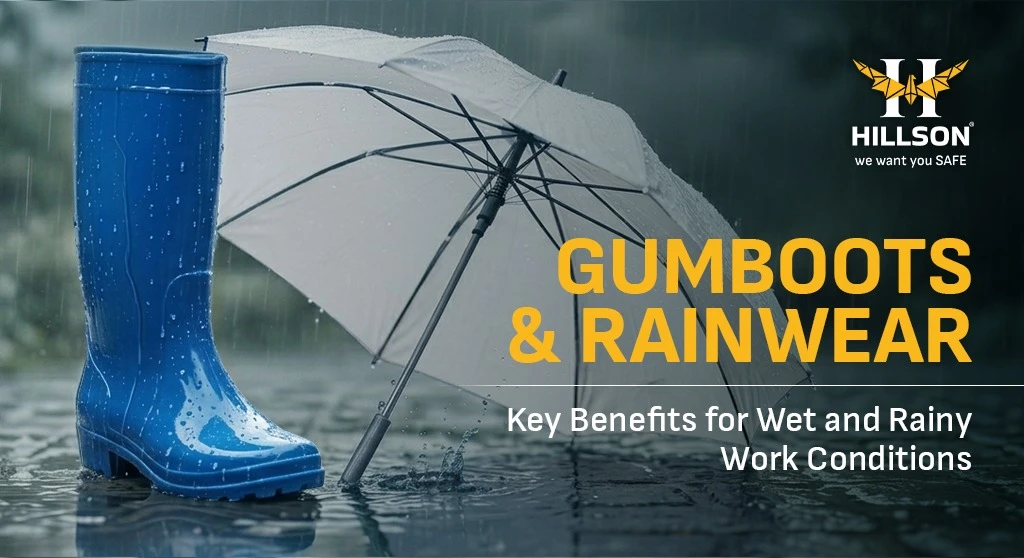
Gumboots are waterproof boots designed to protect the feet and lower legs from water, mud, slush and wet ground. They are commonly used in agriculture, construction, factories, food processing, sanitation, chemical handling, mining and outdoor work.
Good gumboots may include features like waterproof material, anti-slip sole, strong grip, easy-clean surface, chemical or oil resistance and, in some cases, toe protection. The right type depends on the actual work area.
What Is Rainwear?
Rainwear includes raincoats, rain jackets, rain suits, rain pants and other waterproof clothing used to protect workers from rain and wet weather. For industrial and outdoor use, rainwear should be durable, comfortable and easy to move in.
In many jobs, visibility is also important. High-visibility clothing standards such as ANSI/ISEA 107 are designed to improve worker visibility using background and retroreflective materials, especially where workers need to be seen around vehicles, machines or low-light areas.
Key Benefits of Gumboots and Rainwear
1. Protection from Water and Mud
The first benefit is simple: gumboots and rainwear keep workers dry. Wet feet and wet clothes can make work uncomfortable, slow and distracting. Gumboots protect the feet in waterlogged areas, muddy fields, wet floors and washdown zones. Rainwear protects the upper body and clothing during rain or outdoor work.
2. Better Grip on Slippery Surfaces
Wet concrete, muddy soil, oily floors and slippery pathways can increase the chance of slipping. Gumboots with proper sole design and tread can help workers get better grip. Safe Work Australia highlights that in wet conditions, tread should be deep enough to deal with surface water.
This is why gumboots should not be selected only by price or colour. The sole pattern, grip and work surface matter.
3. Protection from Workplace Contaminants
Many wet work areas also include mud, chemicals, oils, sewage, fertilizers, animal waste or cleaning liquids. Gumboots create a protective barrier between the worker’s feet and the ground. This is especially useful in farming, sanitation, food processing, factories and chemical-related work.
However, every boot is not suitable for every hazard. HSE notes that “oil-resistant” does not automatically mean “slip-resistant,” so footwear must be chosen according to the real workplace condition.
4. Easy Cleaning and Better Hygiene
Gumboots are easier to wash than regular shoes. This is helpful in industries where workers move through mud, waste, wet soil, dairy areas, fishery units or food-processing zones. Cleanable footwear supports better workplace hygiene and reduces the spread of dirt from one area to another.
Rainwear also protects uniforms and inner clothing from getting dirty or wet, especially during long outdoor shifts.
5. Better Comfort During Long Working Hours
Comfort matters in PPE. If boots are too heavy, too tight or uncomfortable, workers may avoid wearing them properly. Good gumboots should offer the right fit, stable walking support and enough flexibility. Rainwear should allow easy movement while walking, bending, lifting or working outdoors.
When PPE is comfortable, workers are more likely to use it throughout the shift.
6. Useful During Monsoon and Outdoor Work
During the monsoon, many industries cannot stop work. Farming, logistics, construction, road maintenance, factory operations and municipal work continue even in wet weather. Gumboots and rainwear help workers continue their duties with better protection and confidence.
They are not just rainy-season products. They are useful wherever water, mud, wet floors or washdown areas are part of the job.
How to Choose the Right Gumboots and Rainwear
Before selecting gumboots, check the work environment. Is the area muddy, oily, chemical-prone, slippery or waterlogged? Does the worker need toe protection? Will the boots be worn for long hours? Is easy cleaning important?
For rainwear, check waterproofing, stitching, comfort, coverage, visibility and movement. For workers near vehicles, forklifts, road traffic or machinery, high-visibility rainwear can be a better choice.
Final Thoughts
Gumboots and rainwear may look simple, but they play an important role in workplace safety. They protect workers from rain, mud, water, slippery surfaces and wet working conditions. They also support hygiene, comfort and productivity.
The right question is not just, “Do workers need gumboots and rainwear?” The better question is, “Are they using the right gumboots and rainwear for their actual work condition?”
When selected properly, gumboots and rainwear become more than seasonal gear. They become everyday safety essentials.
FAQs
What are gumboots used for?
Gumboots are used to protect feet and lower legs from water, mud, slush, wet floors and certain workplace contaminants.
Are gumboots useful only during monsoon?
No. Gumboots are useful throughout the year in wet, muddy, washdown or industrial work areas.
Why is rainwear important for workers?
Rainwear keeps workers dry, comfortable and protected during rain or outdoor wet conditions. High-visibility rainwear can also improve visibility in risky work areas.
How do I choose the right gumboots?
Choose gumboots based on grip, waterproofing, comfort, boot height, material, work surface and the type of hazard present.
Can gumboots reduce slipping risk?
Proper slip-resistant gumboots can help reduce slipping risk, but they should be used along with good housekeeping, safe walking practices and proper workplace maintenance.